

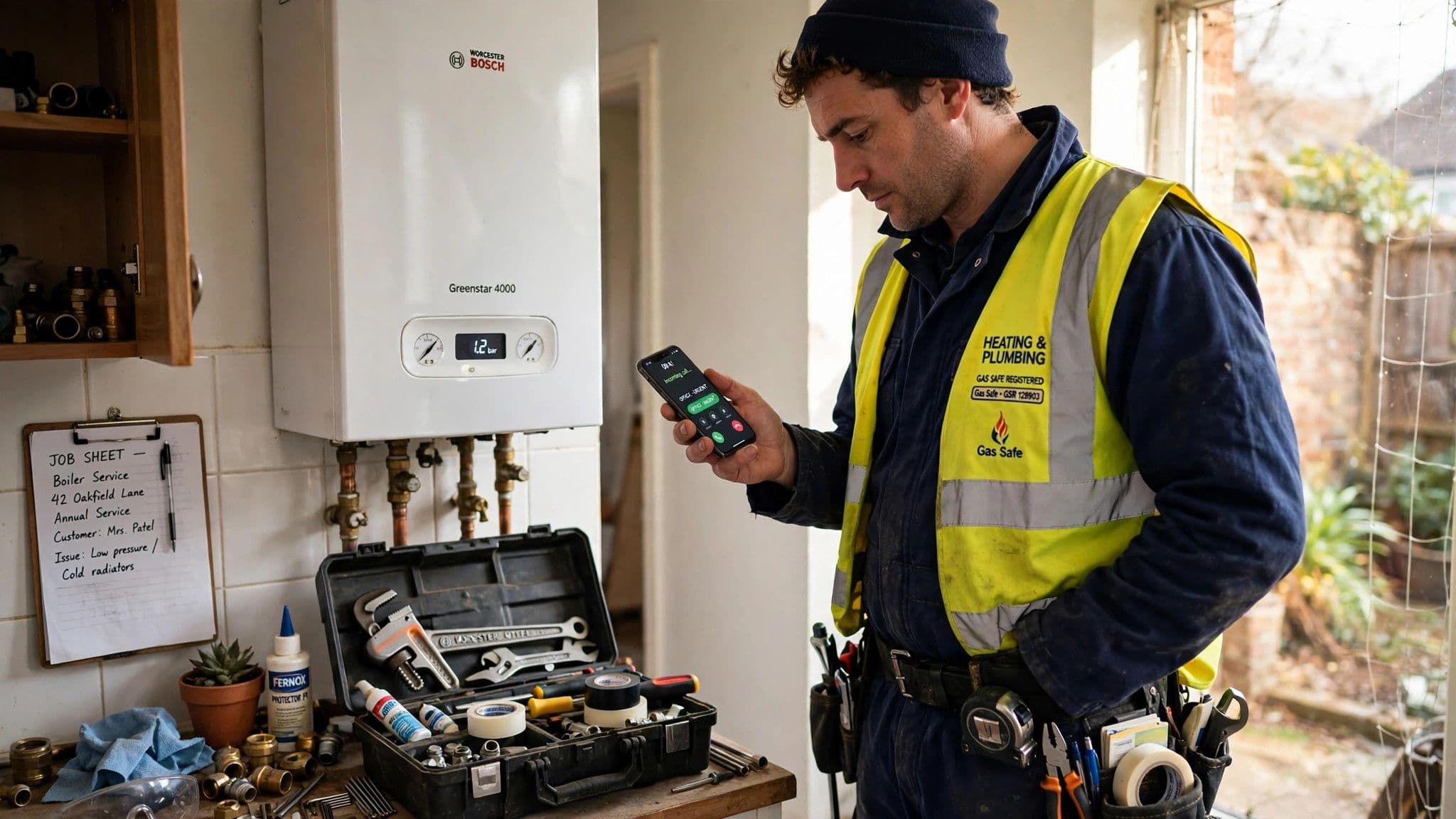
Most businesses do not miss calls because they do not care. They miss calls because both hands are busy: under a boiler, mid-treatment, in a viewing, on another call. The caller, meanwhile, has already moved on emotionally by the time anyone can ring back, and callback attempts become phone tag that quietly dies.
Missed-call text-back attacks exactly that gap with almost embarrassing simplicity. The moment a call is missed, the caller automatically receives a short, polite text from the business: sorry we missed you, what do you need, reply here and we will sort it. The conversation starts in the one channel every caller already has open, and it starts now, not after the job finishes.
The quiet advantage is what happens to the reply. A text thread captures the need, the address and the urgency in writing, in the caller's own words, without anyone playing voicemail detective. Your team picks up a written enquiry they can answer in the gaps of the day, and urgent replies can be flagged the moment they land.
Honesty about the limits: a text-back is not a conversation, and it cannot answer questions or book anything by itself. It is a net, not a receptionist. But as a first step it is hard to beat: it runs on the calls you already receive, needs no change in how your team works, and it turns silent missed calls into visible, answerable enquiries.
You can watch the pattern run in our missed-call recovery demo on this website, and it is often the first piece we switch on before a full voice agent is trained. Small, honest, and switched on this week beats a perfect system planned for next quarter.