

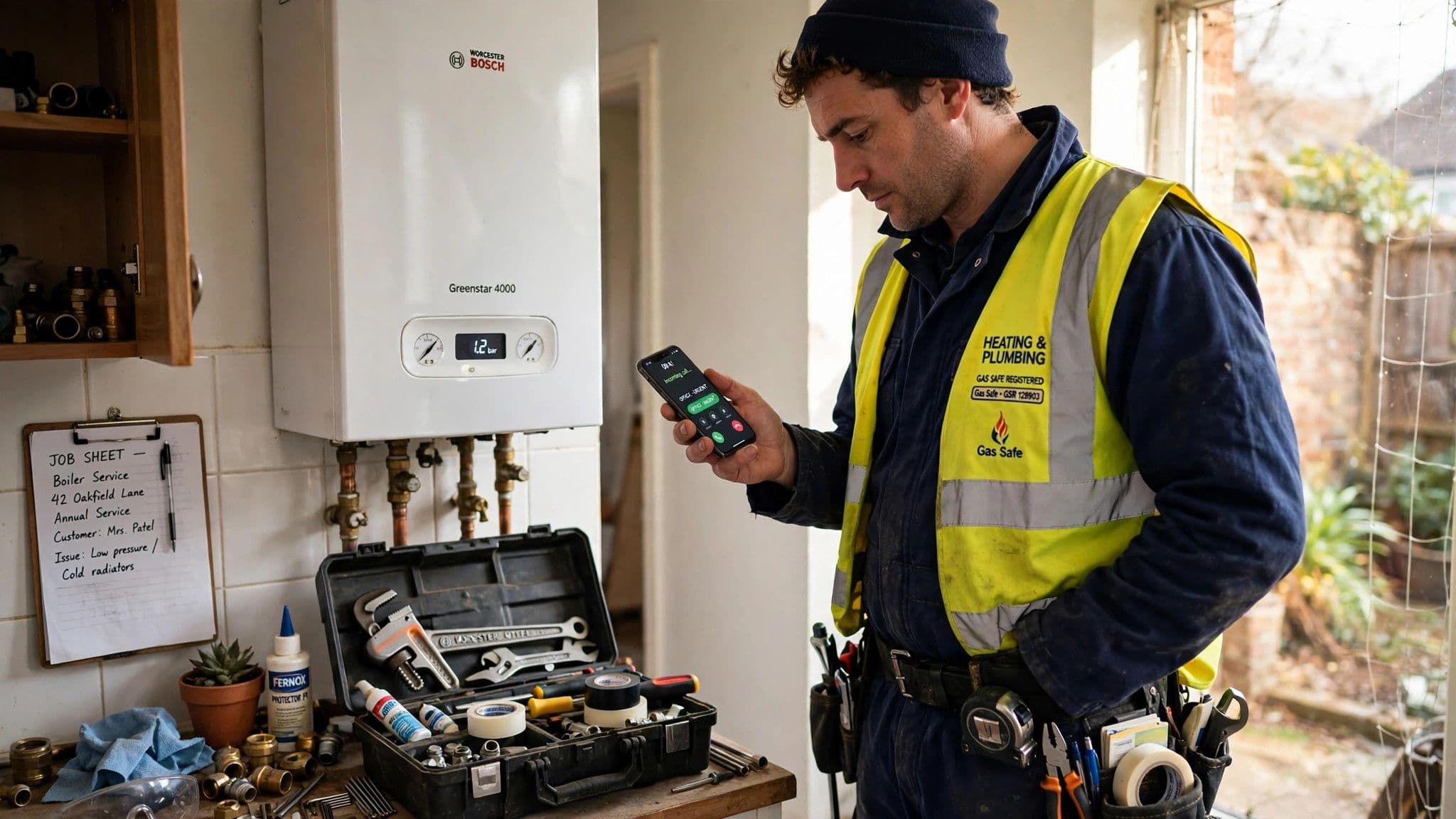
The short answer is that an evening job goes to whichever firm answers the phone. Boilers fail and pipes burst when people are home, which is mostly evenings and weekends, and a homeowner standing in front of a problem does not leave a voicemail and wait until morning. Firms stop losing these jobs by making sure every after-hours call is answered, sorted and captured, even when every engineer is out on another job.
Why do so many plumbing and heating jobs start in the evening?
Because that is when houses are lived in. Heating is switched on, showers and baths run, and faults announce themselves. It is also when homeowners finally have time to deal with the smaller jobs they noticed days earlier. The result is that a large share of genuine demand arrives after the office has closed, and much of it is urgent, which makes it the most valuable work of the day rather than the least.
What happens when that call is not answered?
The caller rings the next firm on the list. For a genuine emergency, a leak or no heating with children in the house, there is no question of waiting until morning. Even for non-urgent work, an answered call tonight usually beats a voicemail returned tomorrow, because the firm that answered has already taken the details and booked the visit. The firm that missed the call rarely even knows the job existed.
How does an AI answering setup handle an after-hours call, step by step?
First, it answers in seconds, in the evening, at midnight and on a Sunday, in your firm's name. Second, it works out what kind of call it is: a genuine emergency, or a routine job that can be booked in. Third, where you have approved the wording in advance, it can pass on practical first steps, such as how to turn the water off at the stopcock, while help is arranged. Fourth, it captures the caller's name, number, address, the problem and how urgent it is, completely. Fifth, emergencies are flagged to your on-call engineer straight away, and routine jobs are booked or written up as finished enquiries for the morning. There is more on how this fits firms like yours on our home services page.
What does it not do?
It does not diagnose faults beyond the wording you have approved, and it does not quote prices it has not been given. It cannot send an engineer by itself unless you have set it up that way, and anything unclear or sensitive is captured in full and passed to a human, never guessed at. It does not replace your engineers' judgement either; it makes sure their next job is captured instead of lost.
Does it help during the day as well?
Yes, because the same problem happens at noon. Engineers on site cannot safely answer the phone, and office staff are busy with the customers already booked in. The same setup covers the overflow: every call answered, sorted and captured, so the day's enquiries stop depending on who happened to be free.
If you want to see the pattern running, our lead-response simulator lets you send a pretend enquiry at any hour and watch it answered, qualified and captured. And our missed-call calculator will put your own figures, not industry claims, on what unanswered calls may already be costing you.